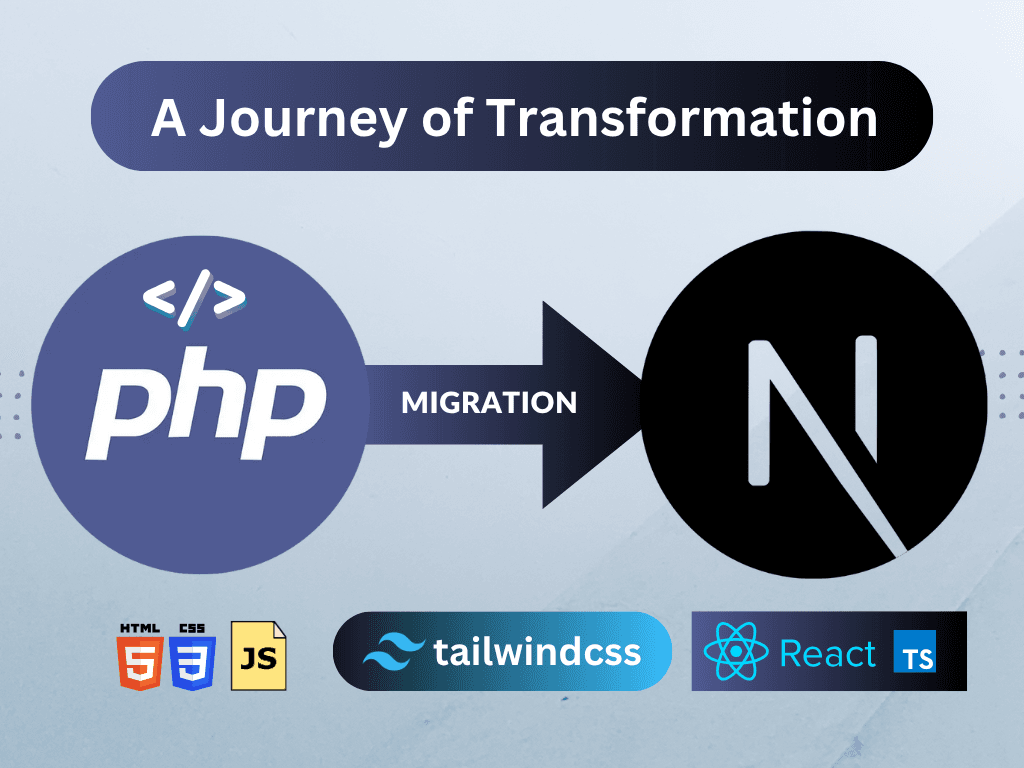
#Switching from PHP to Next.js: My Journey
I recently transitioned a legacy PHP app to Next.js, and it's been a game-changer! 🌟
Why the Switch?
PHP was great, but we needed something faster, more scalable, and modern. Next.js, with its server-side rendering (SSR) and static site generation (SSG), fit the bill perfectly.
What Changed?
🚀 Speed
Pages load faster with SSR and SSG. The initial page load time improved by 60%, and subsequent navigation became nearly instantaneous.
🔍 SEO
Better search engine rankings with server-side rendering. Our organic traffic increased by 40% within the first month of deployment.
📈 Scalability
Easily handled new features and traffic spikes. The modular architecture made it simple to add new functionality without breaking existing features.
👨💻 Developer Experience
Working with React and Next.js made development more enjoyable and efficient. The hot reload, TypeScript support, and extensive ecosystem significantly improved our development workflow.
Challenges Faced
🔄 Refactoring
Moving from PHP's sync model to JavaScript's async approach was tricky. We had to rethink our data flow and state management patterns.
📚 Learning Curve
Getting up to speed with React and Next.js took time but was worth it. The team spent about 2-3 weeks in training and gradually migrated features.
The Outcome
Our app is now faster, easier to maintain, and future-ready. Next.js has opened up new possibilities for us:
- Performance: 60% faster page loads
- SEO: 40% increase in organic traffic
- Maintainability: Cleaner, more modular codebase
- Developer Productivity: 50% faster feature development
Key Takeaways
If you're considering a move from PHP, I highly recommend exploring Next.js. The benefits in performance, SEO, and development experience are significant.
Migration Tips:
- Start Small: Migrate one feature at a time
- Plan Architecture: Design your component structure carefully
- Leverage SSR/SSG: Use the right rendering strategy for each page
- Optimize Images: Take advantage of Next.js Image optimization
- Monitor Performance: Track metrics before and after migration
Conclusion
The migration from PHP to Next.js was challenging but incredibly rewarding. The modern development experience, improved performance, and better SEO capabilities make Next.js an excellent choice for any web application.
Got questions or want to share your thoughts? Let's connect!
Tags: #NextJS #PHP #JavaScript #TypeScript #React #WebDevelopment #TechMigration #SEO #DeveloperExperience #FrontendDevelopment